The Claw v0
A fully 3D-printed bionic hand, designed to print as a single PLA part and assemble with almost nothing else.
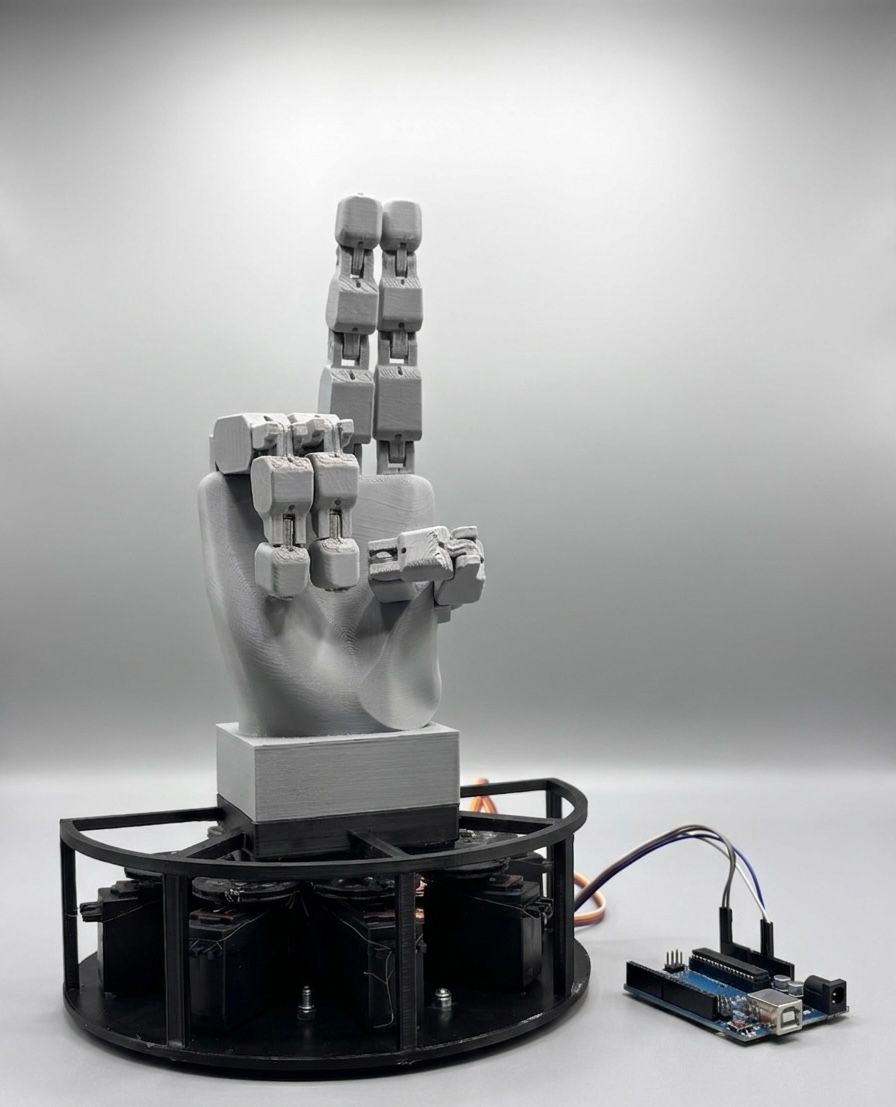
It moves.
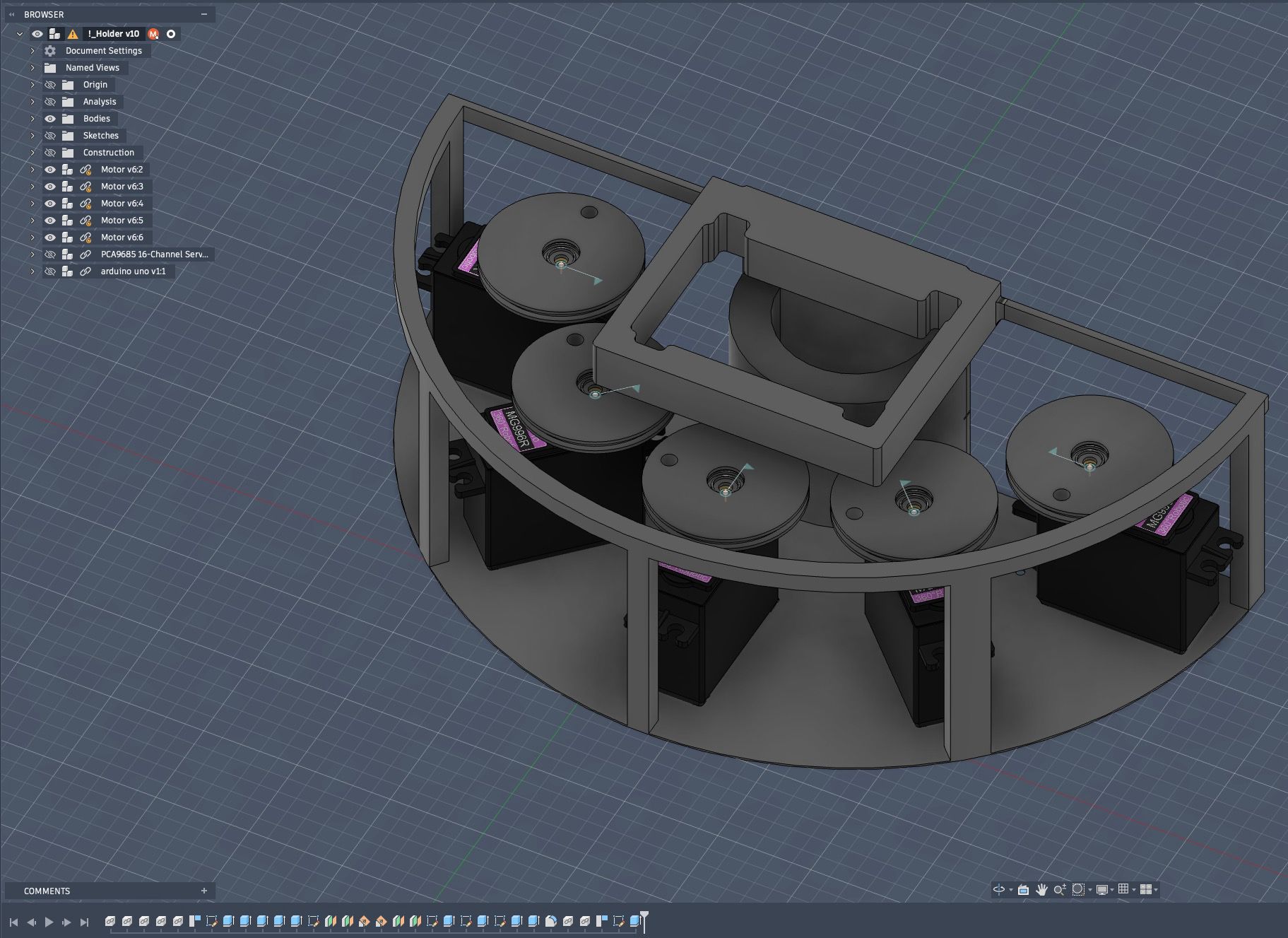
Servos pull the tendons routed through the palm and holder, curling the fingers.
Antagonistic double-loop tendon drive allows smooth motion without elastic.
I wanted to build something that I deeply care about, and for me that has always been a bionic hand.
Ever since I was little I have been fascinated by bionic hands, and working on one has long been a goal of mine. This class felt like the perfect chance to make that real, so I set out to design the most advanced hand I could in just three weeks: cheap to make, the easiest possible to assemble, a single part printed entirely in PLA. I couldn't find anything like it online, so I wanted to build it and contribute it back to the community.
Standing on the shoulders of makers
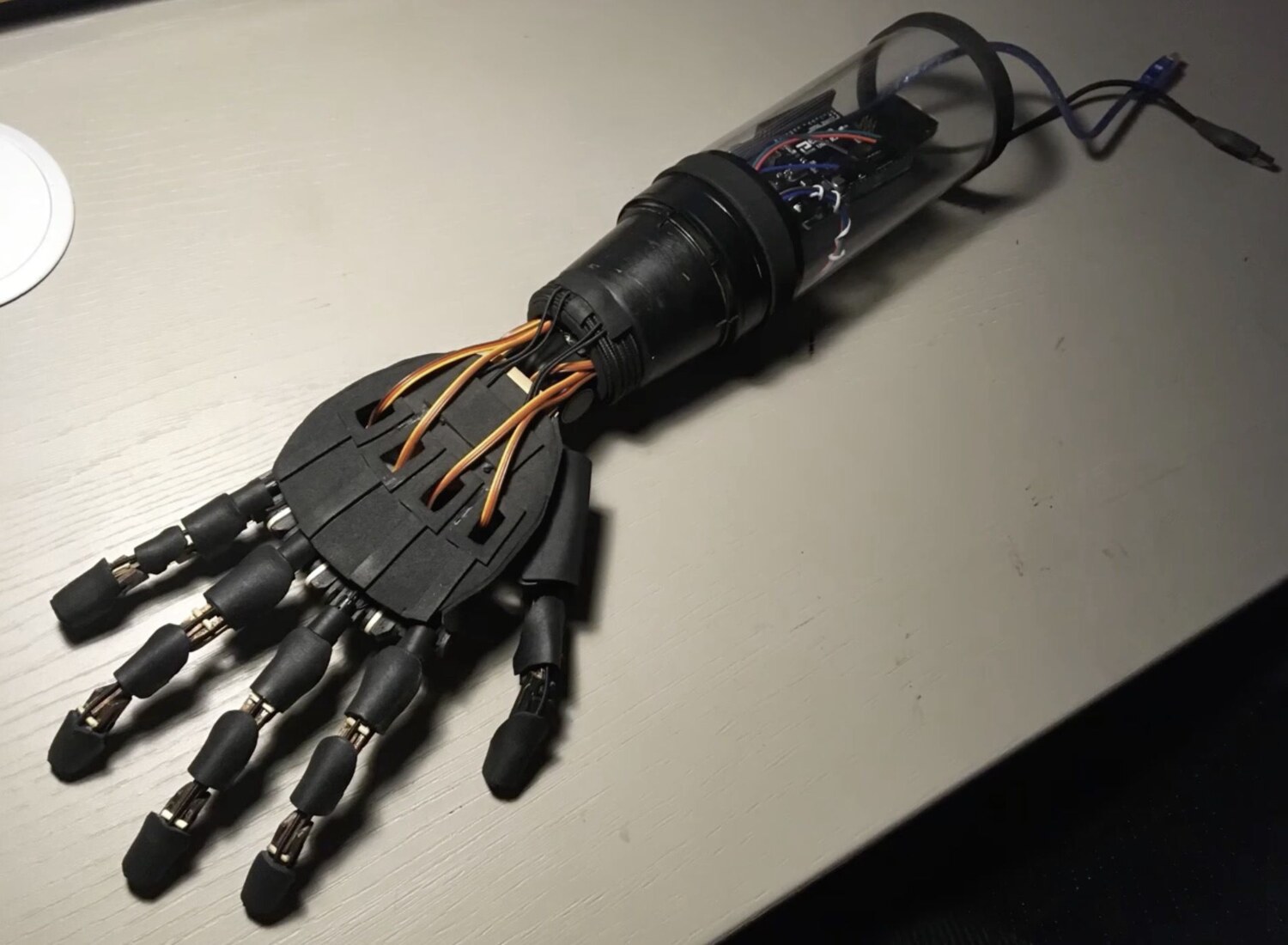
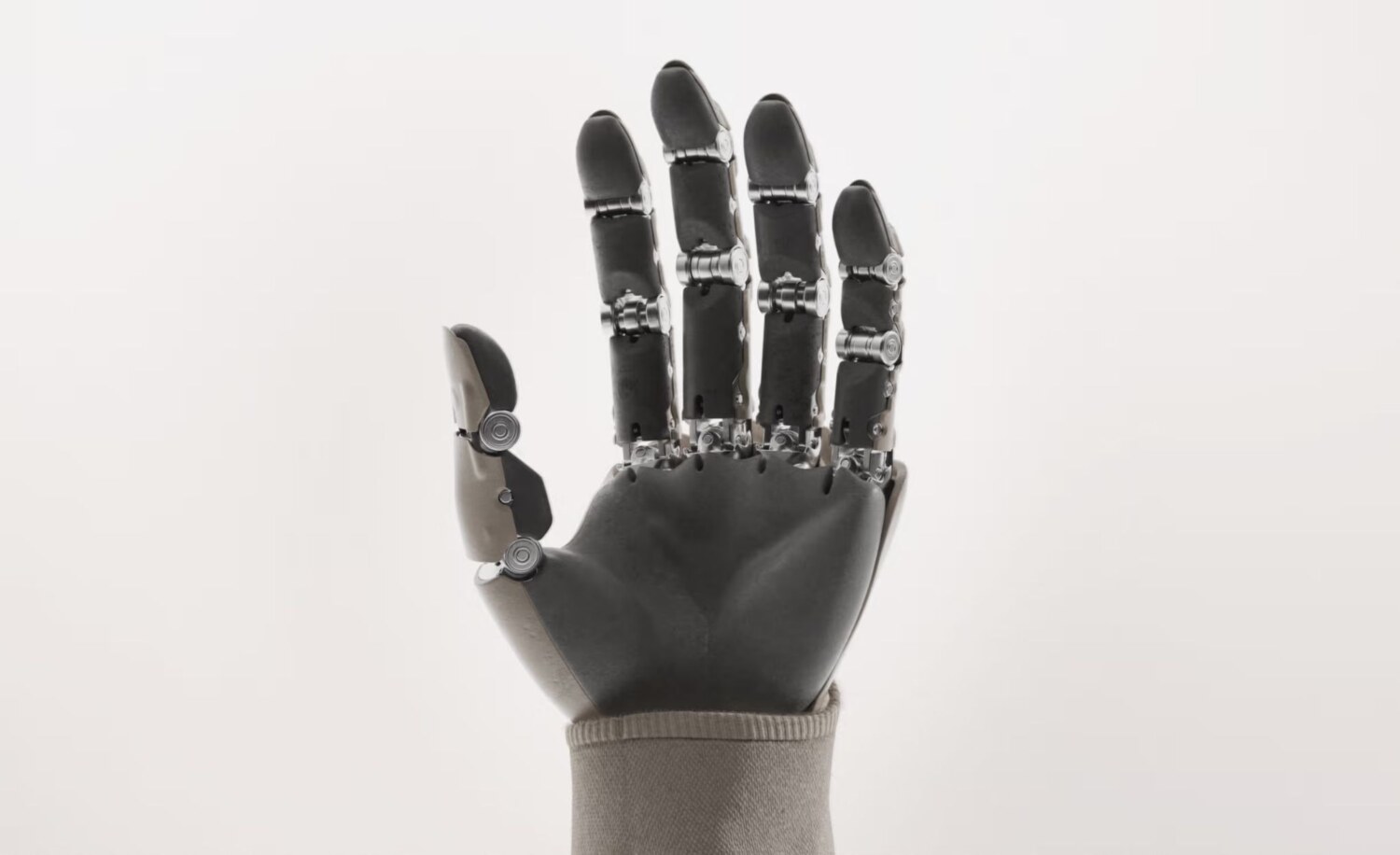
Existing tendon-driven hands and open-source builds shaped the mechanical approach, and anatomical references guided how the palm and finger geometry should be designed.
Thinking on paper first
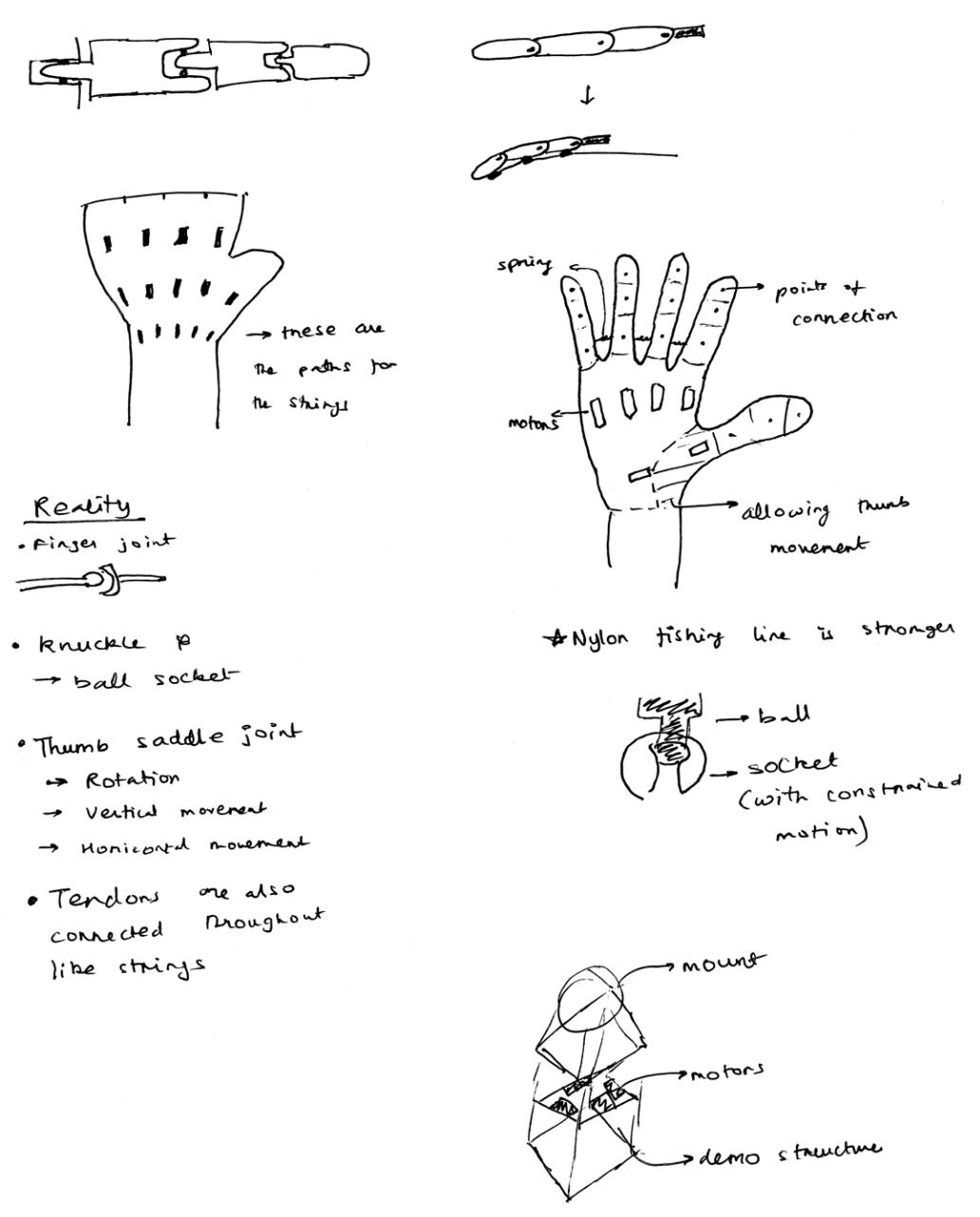
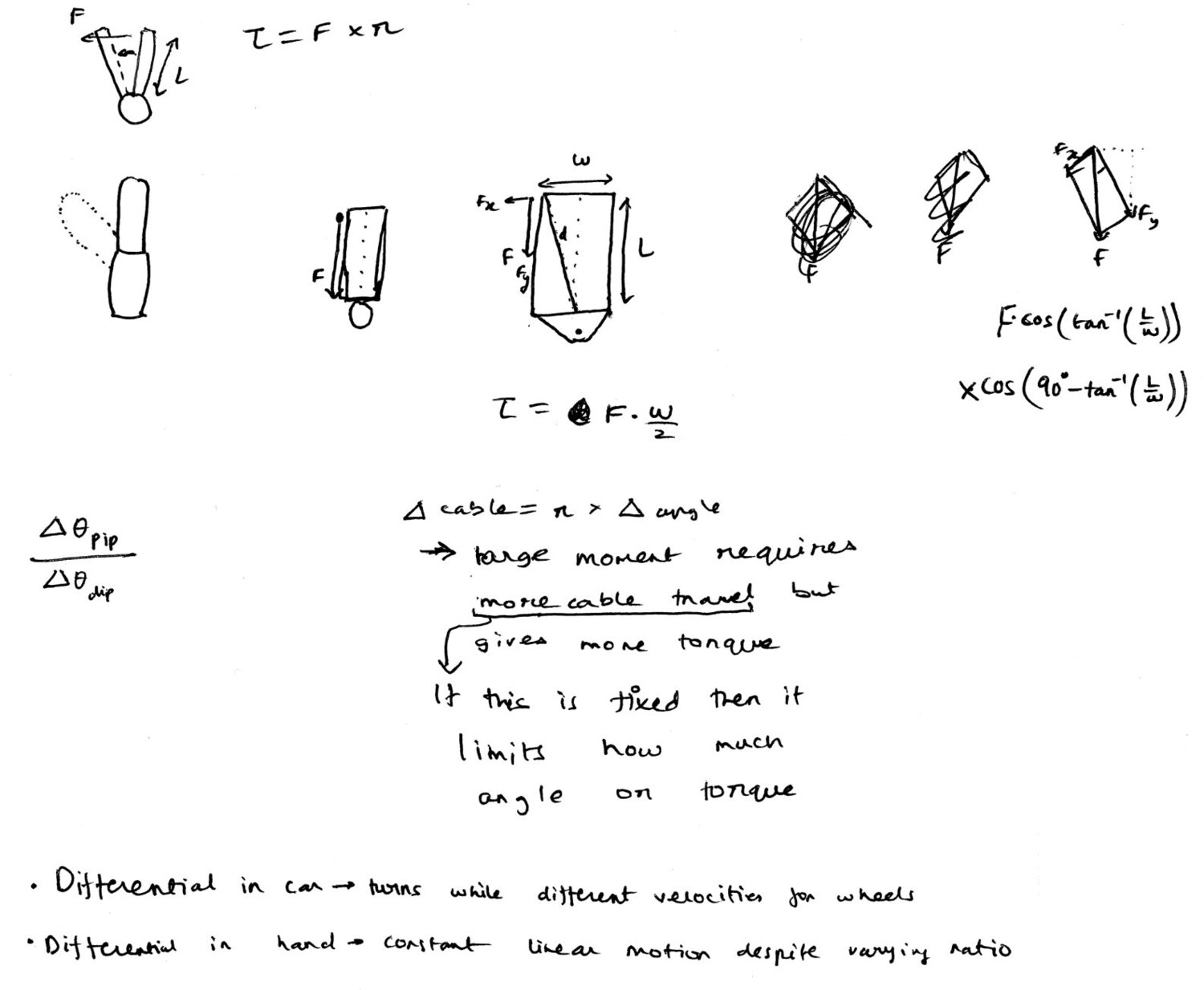
Roughly twenty five arms failed to get here
Printing a fully assembled hand in a single pass means any one failure costs the whole print. Each iteration retired one bad idea, and a wrong print orientation alone could wreck the surface quality.
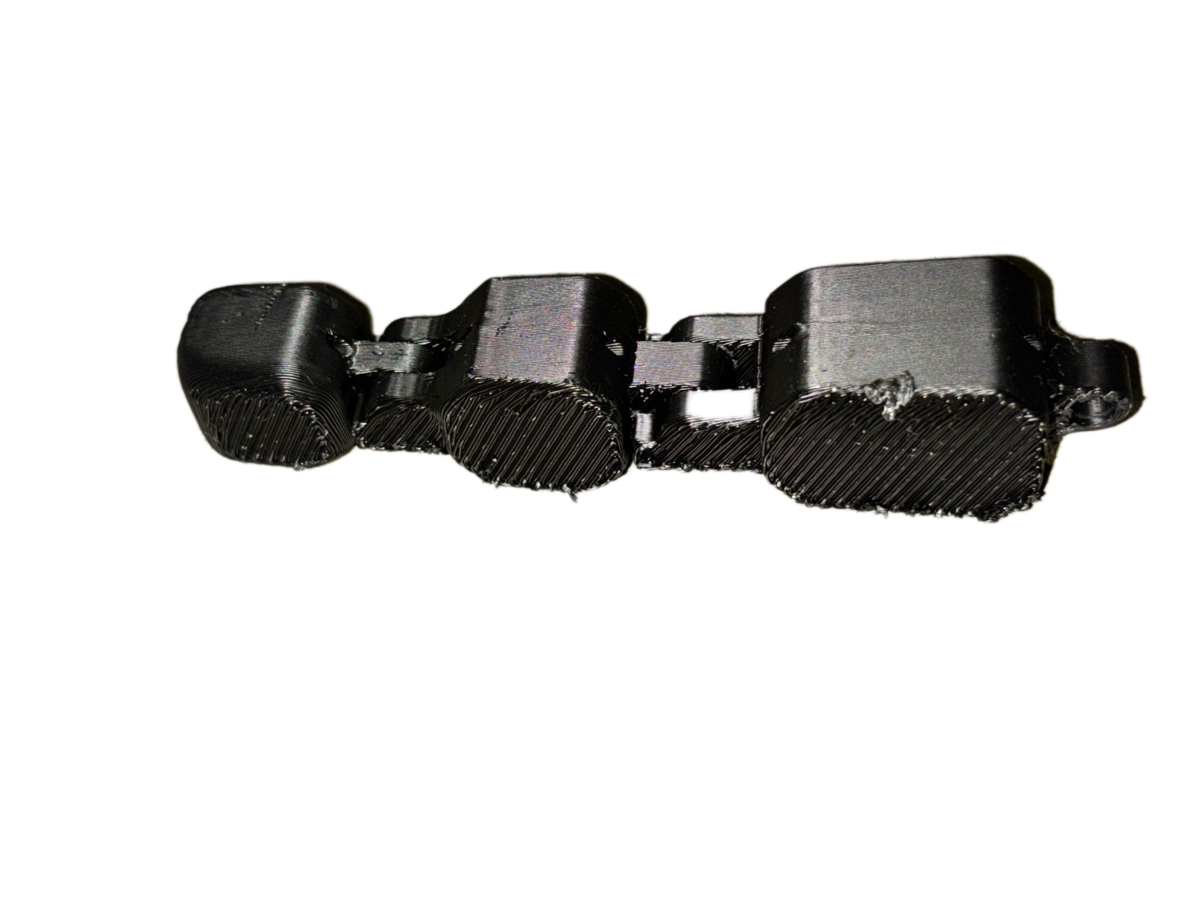
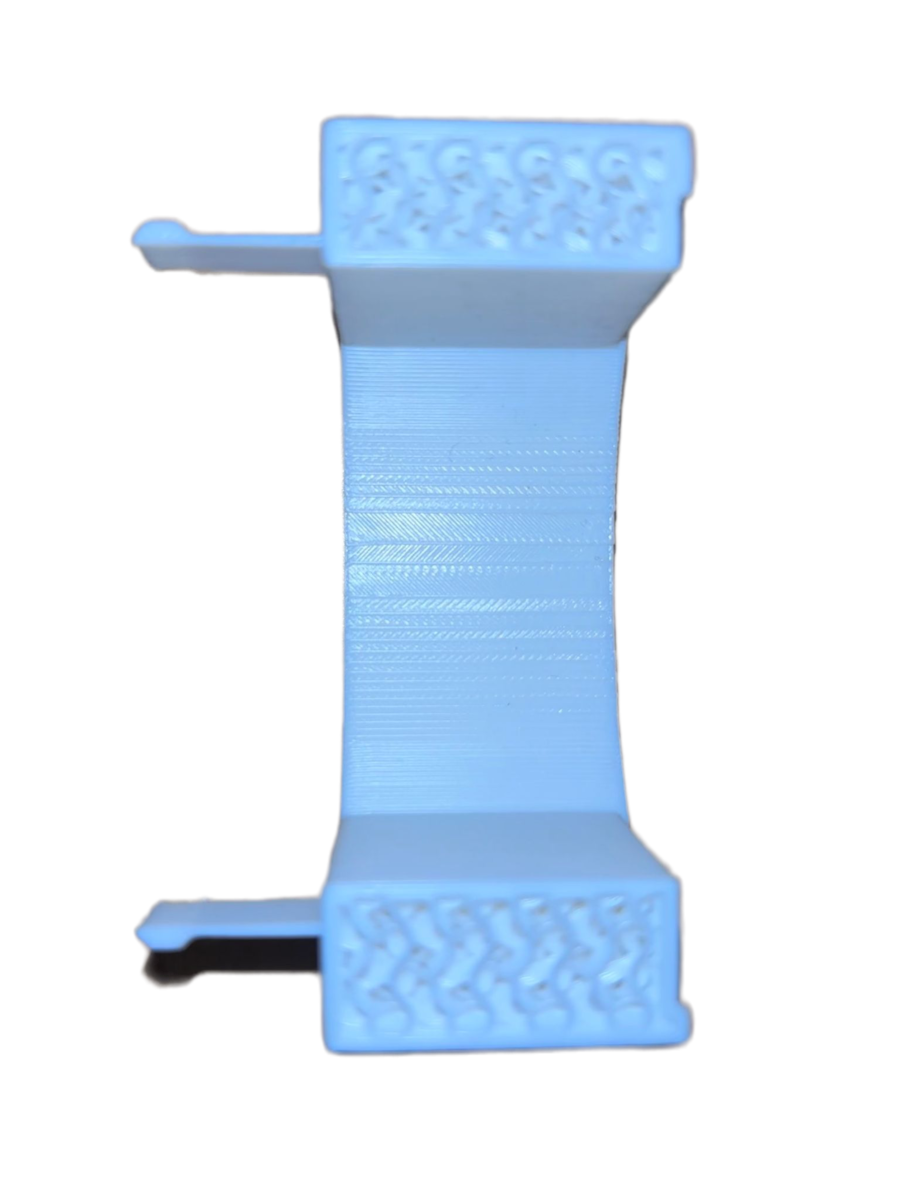
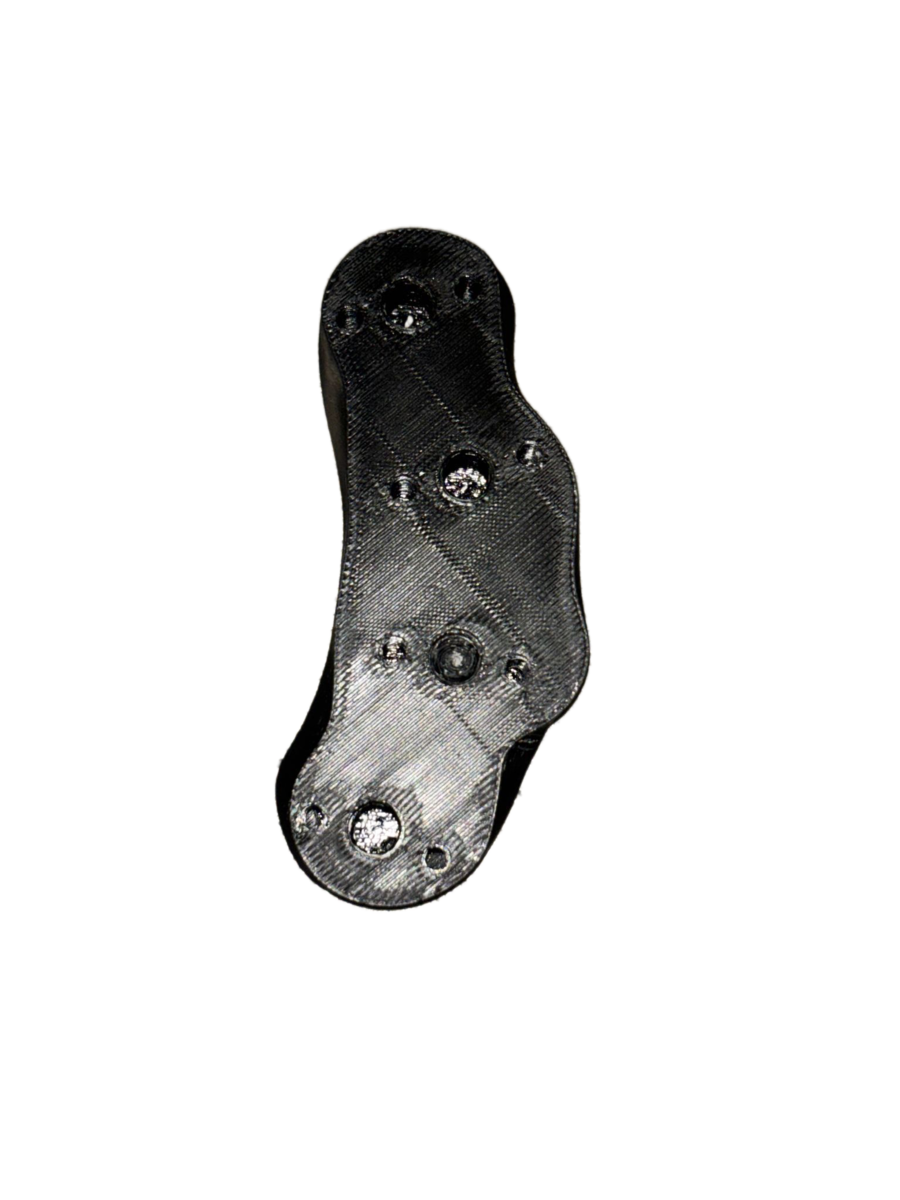
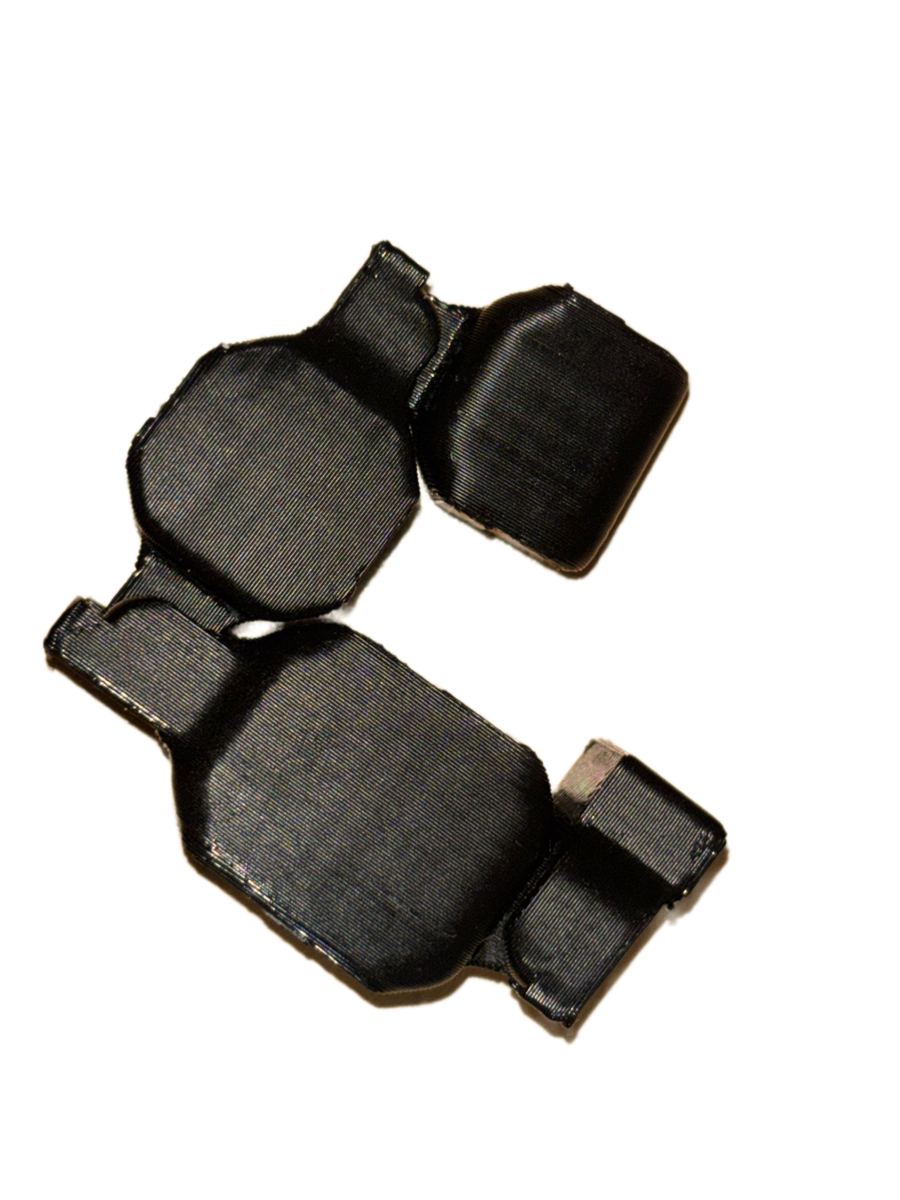
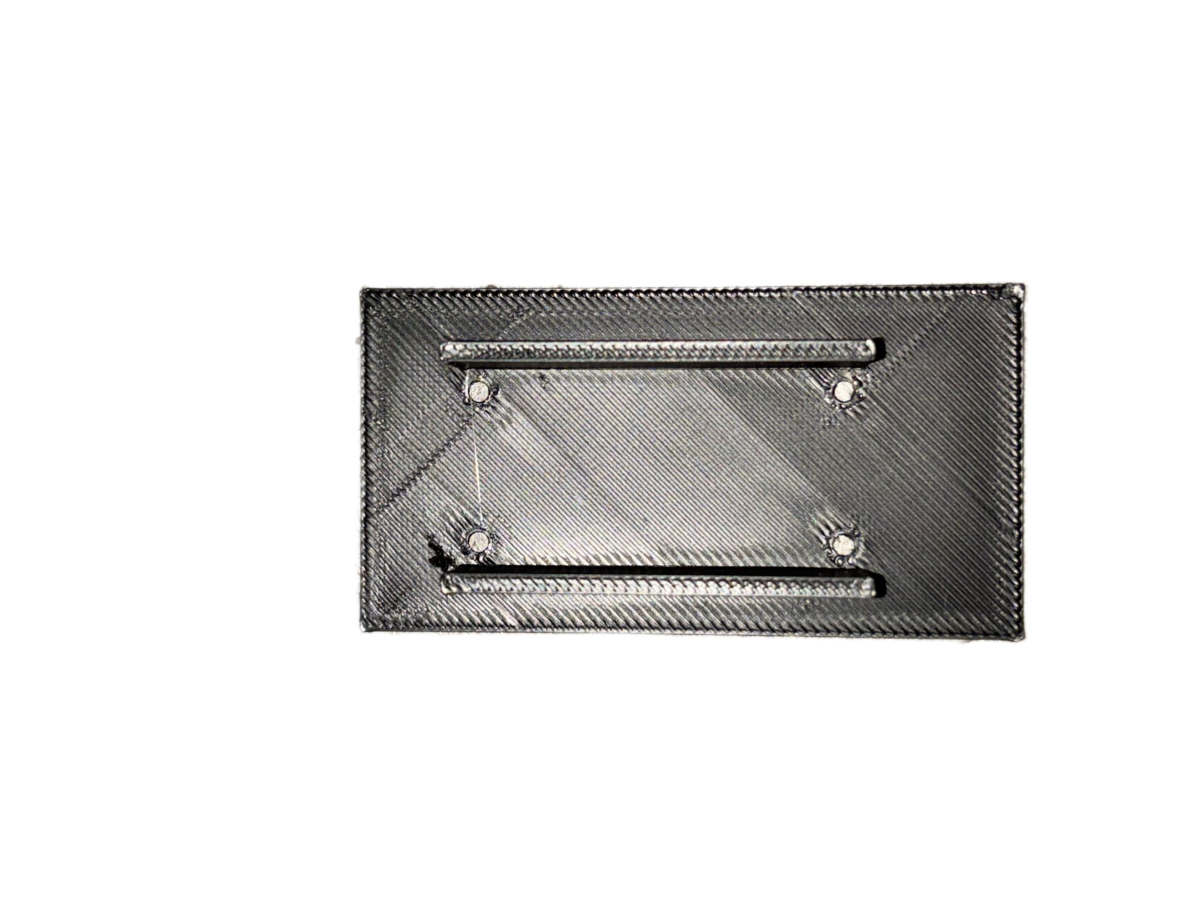
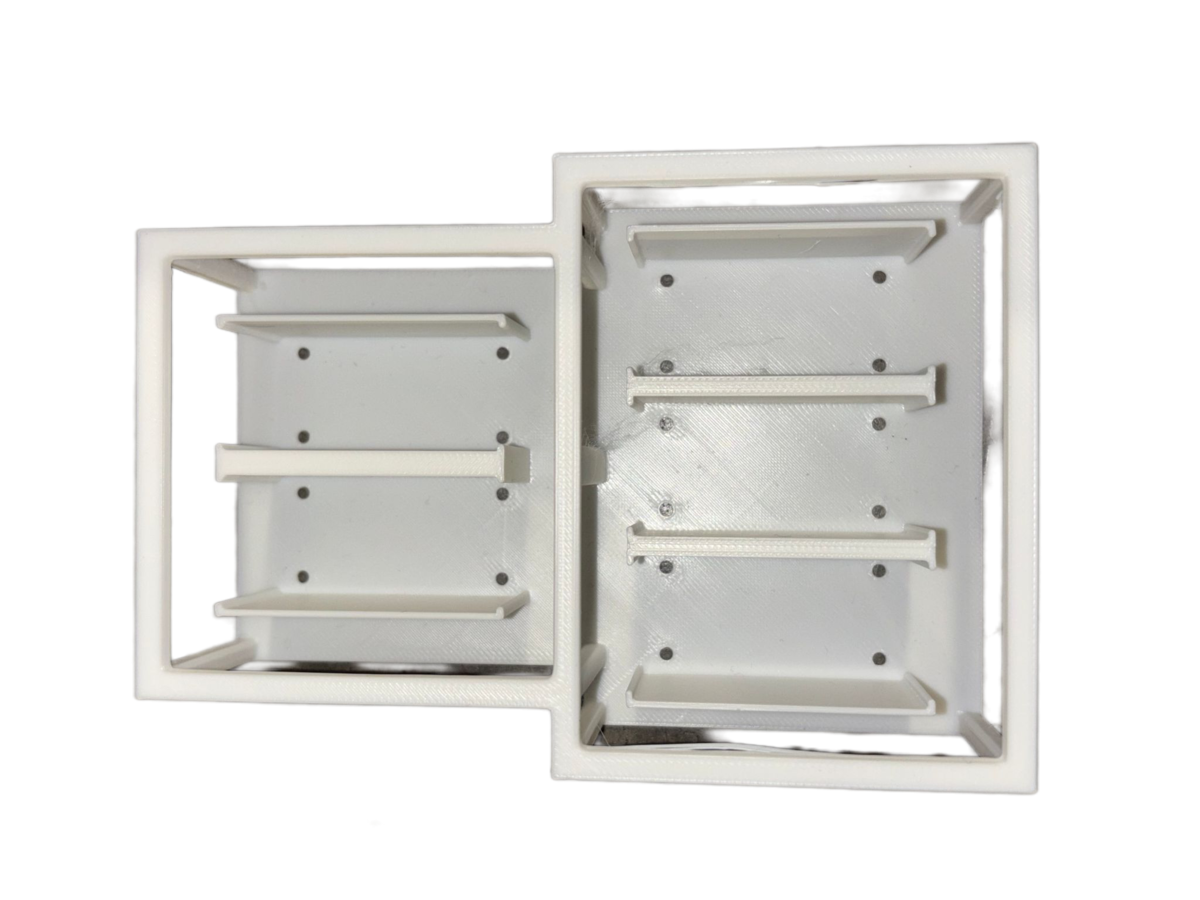
Designing the hand & the holder
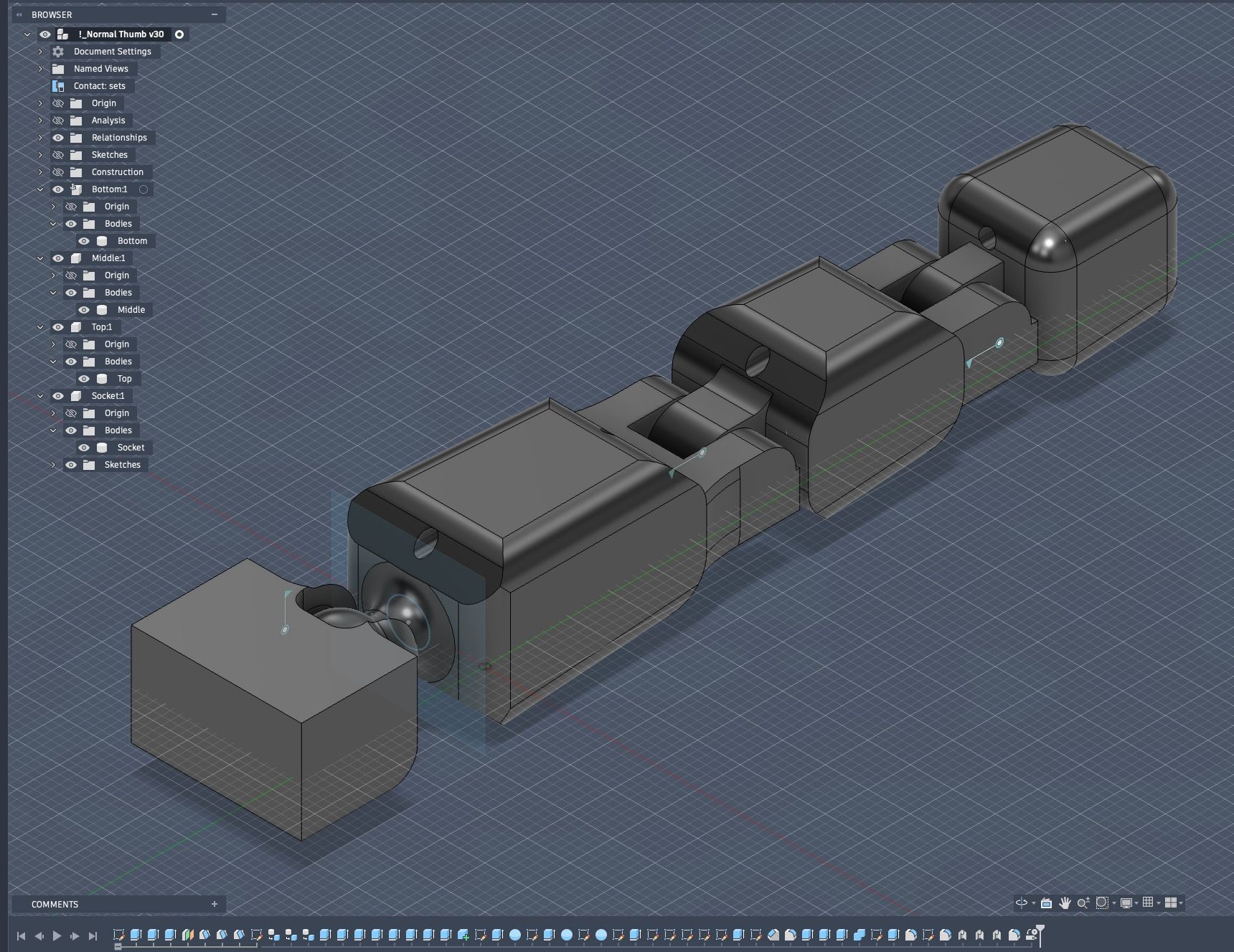
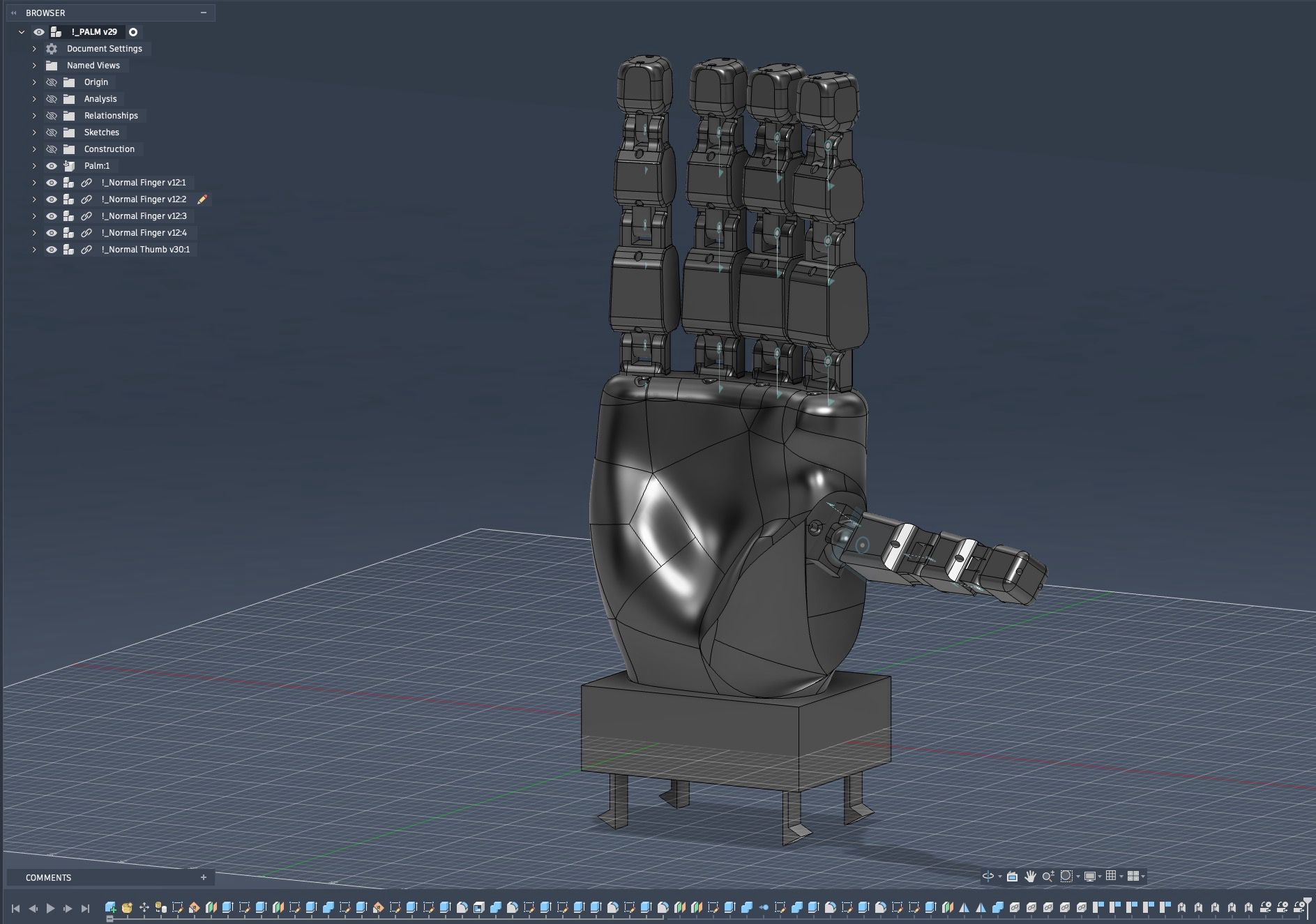
Over 50 hours of CAD. The finger's three segments share a joint but vary in thickness and draft, and tendon tubes sit at different distances from center to tune each moment arm. The palm borrows a real human-hand mesh to size and shape itself, and a ball-socket thumb pivots on every axis.
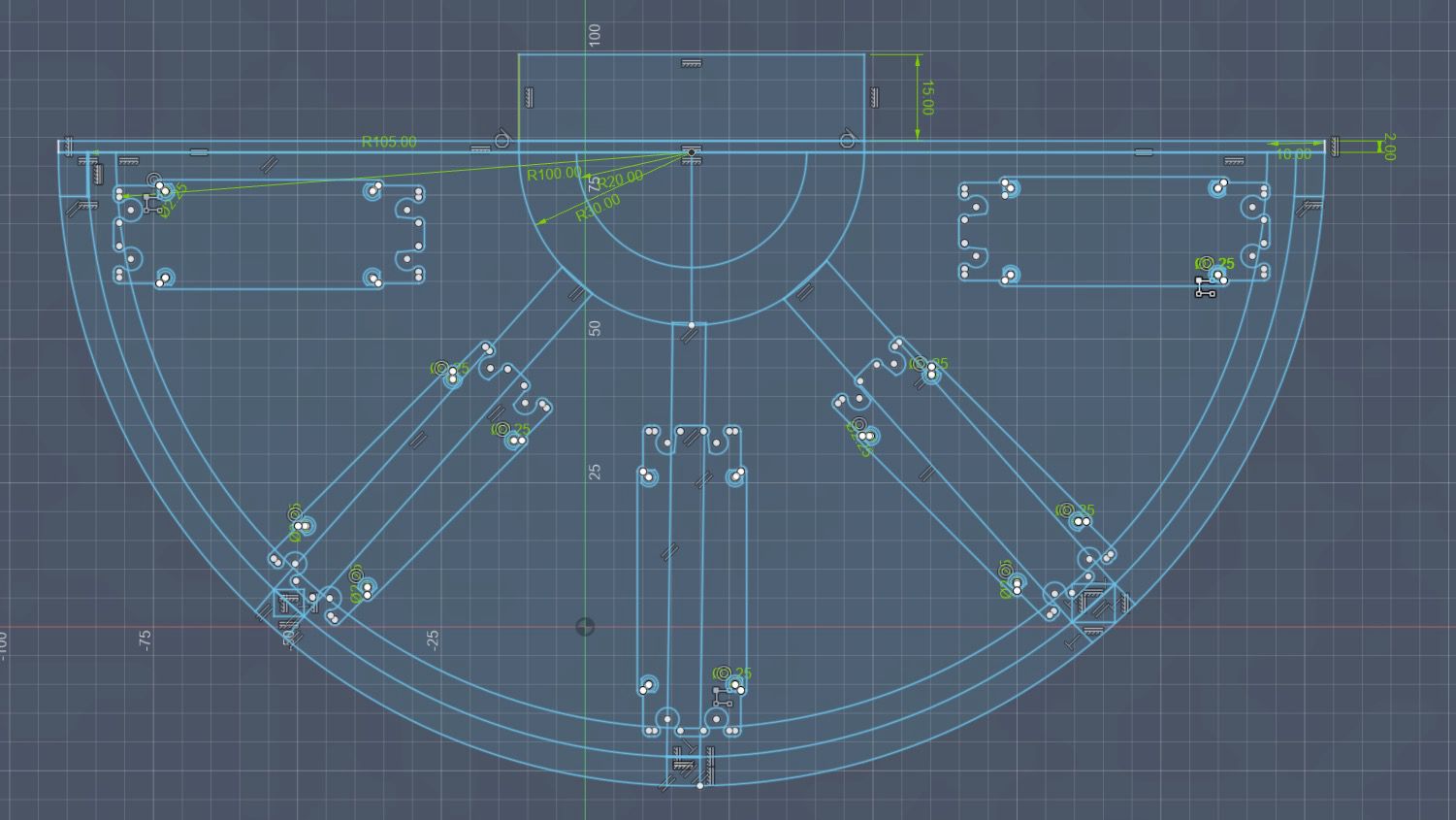
Stress, one segment at a time
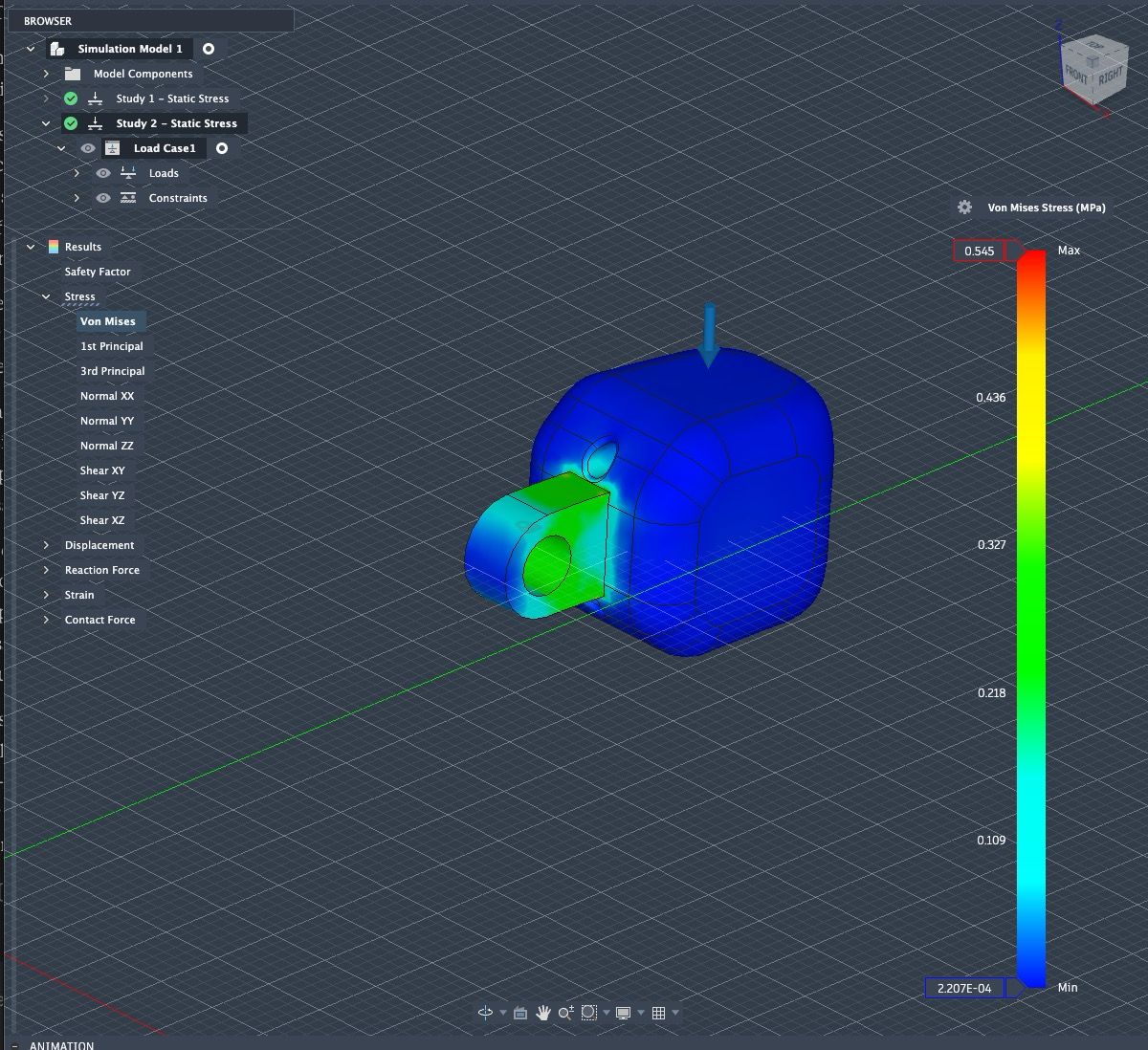
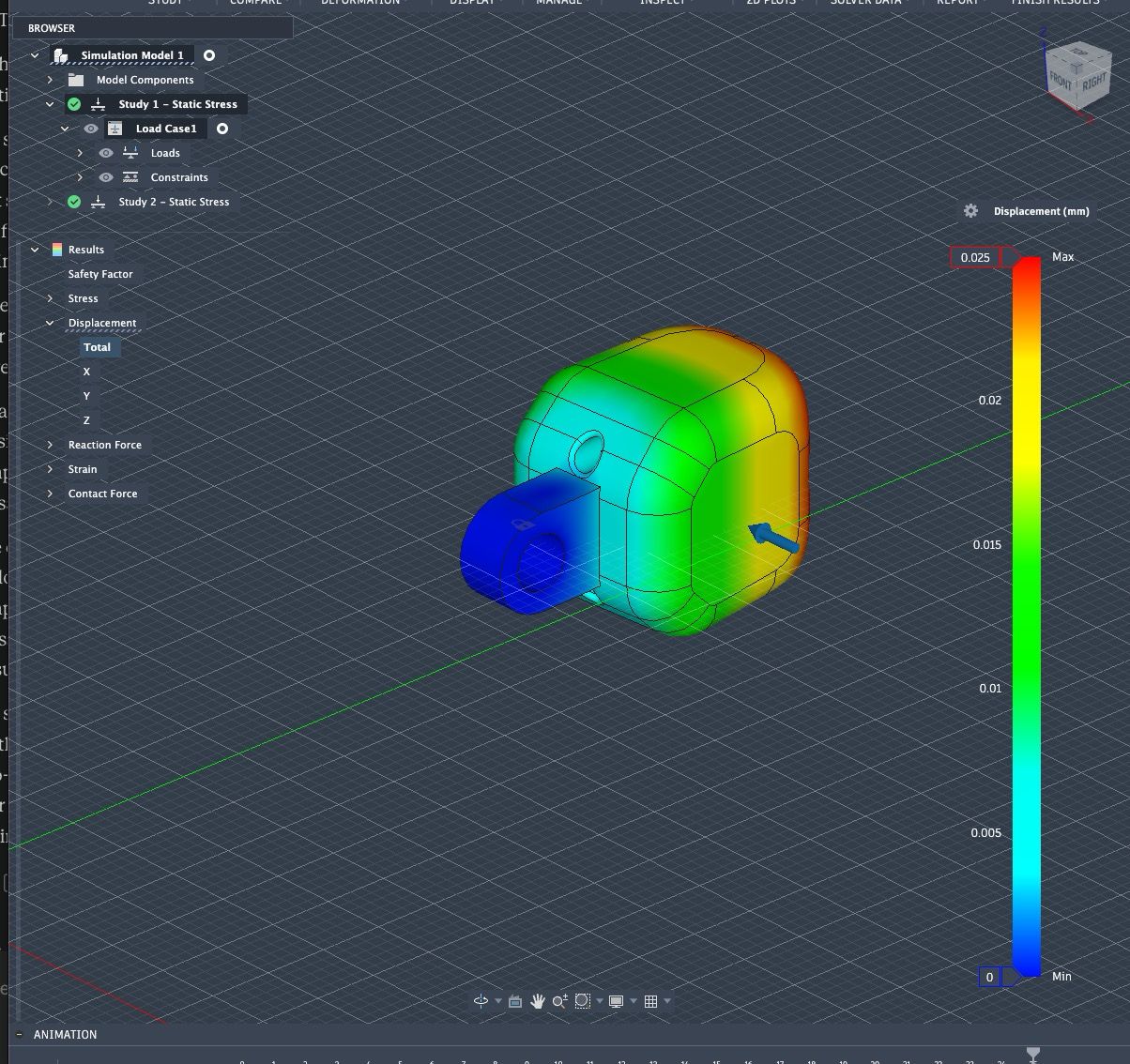
The results were most useful at the single-segment level, and harder to generalize across every joint of the assembly.
Supports, skirts & orientation
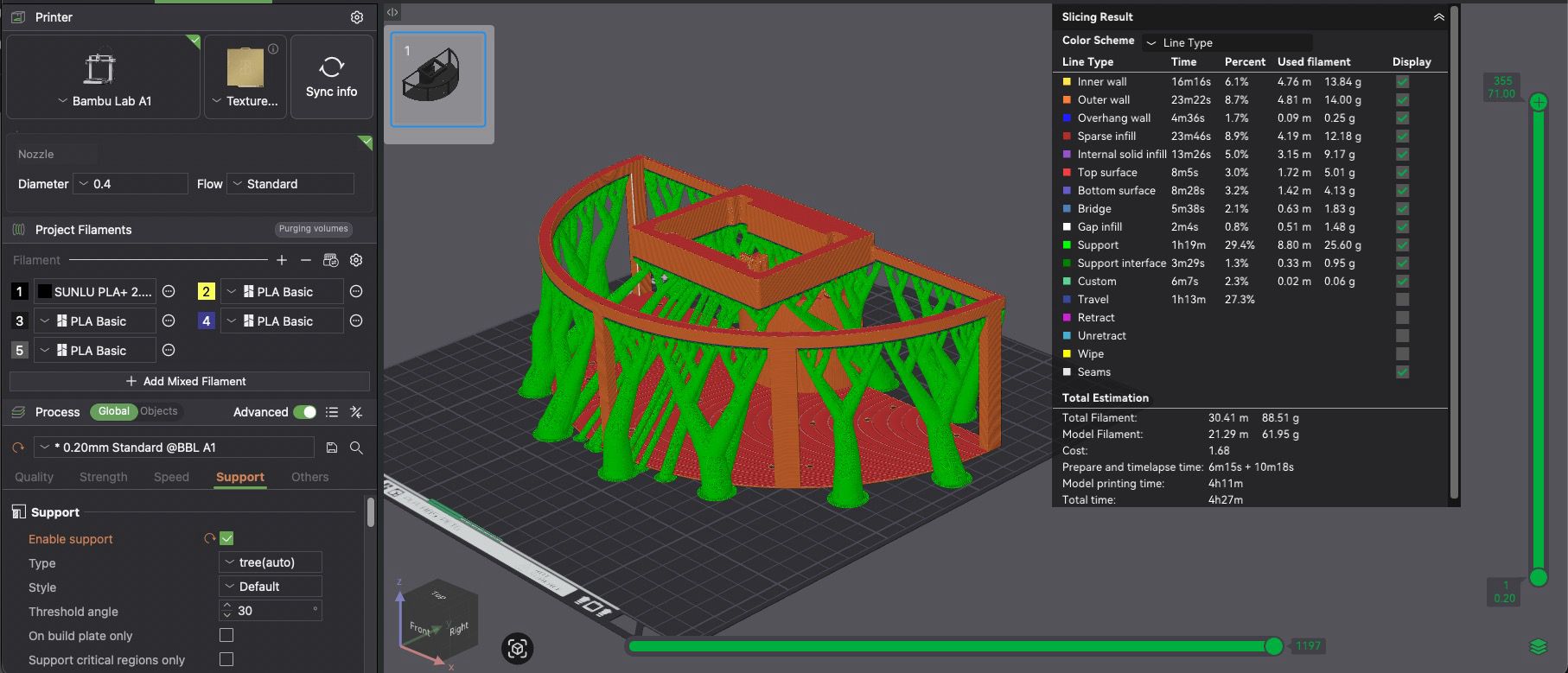
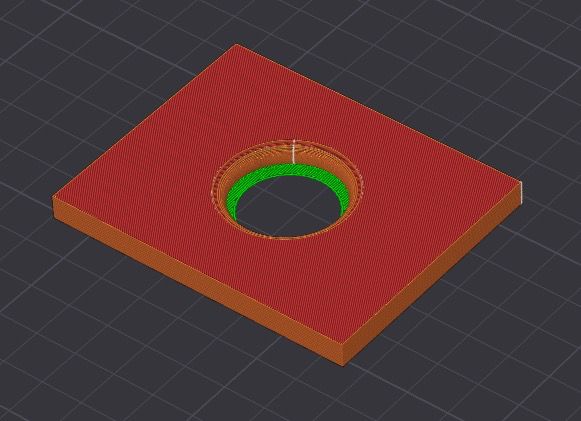
Dialing in bed heating, supports, skirts and brims was where most of the printing knowledge was earned.
How it actually performed
Hit the core goals: the full print cost under $10 and delivered the degrees of freedom I was after.
Driving tendons with servos was painful to wire, and repeated use still lets tendons escape the pulley grooves.
Couldn't generate enough torque to hold heavy or complex objects like a full water bottle. Tendons should have routed through bowden tubes.
Two details I'm proud of
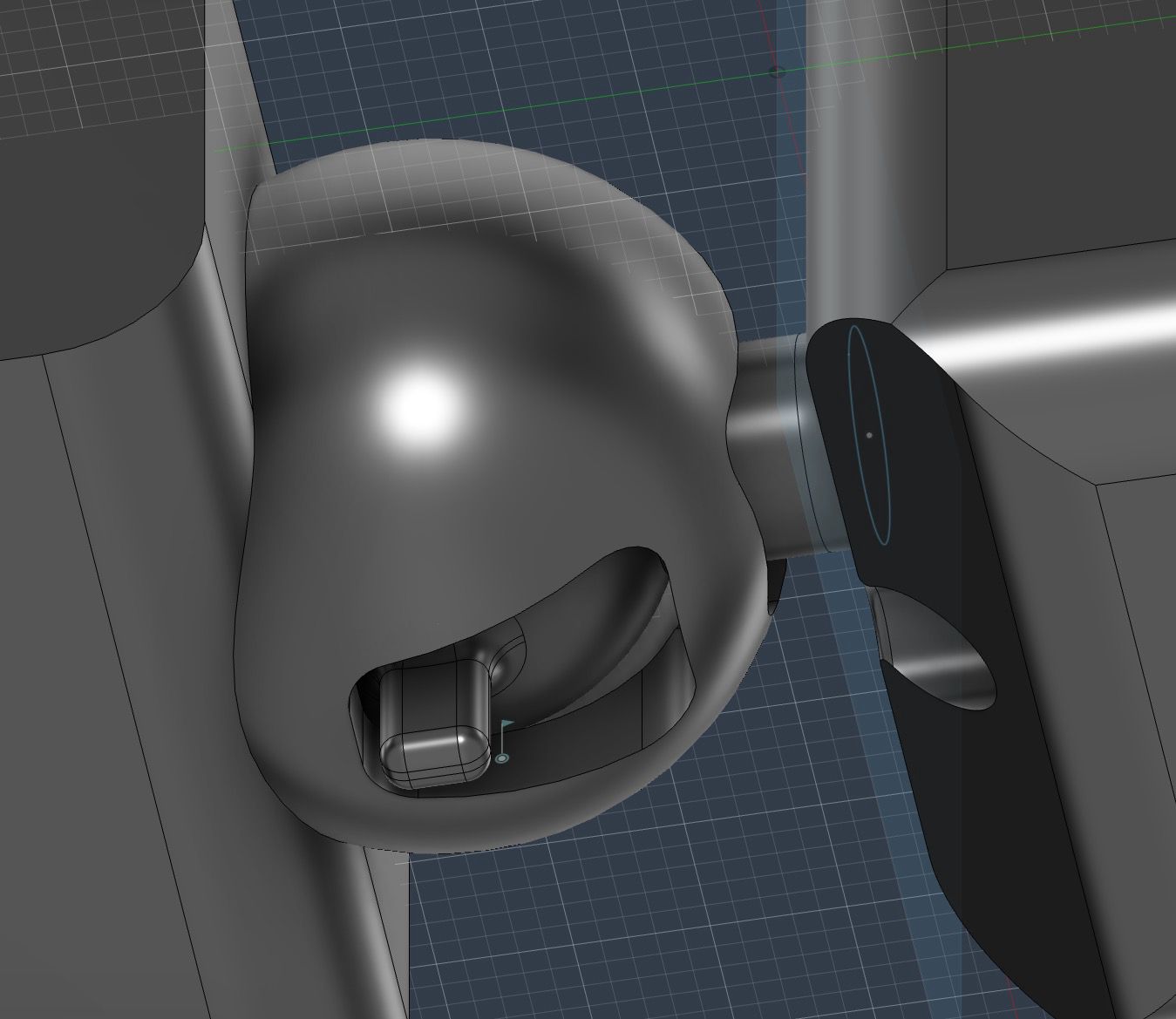
A protrusion that tames the ball socket
The thumb pivots on a ball-socket joint like a real bionic thumb, and a small protrusion restricts its rotation to a usable range.
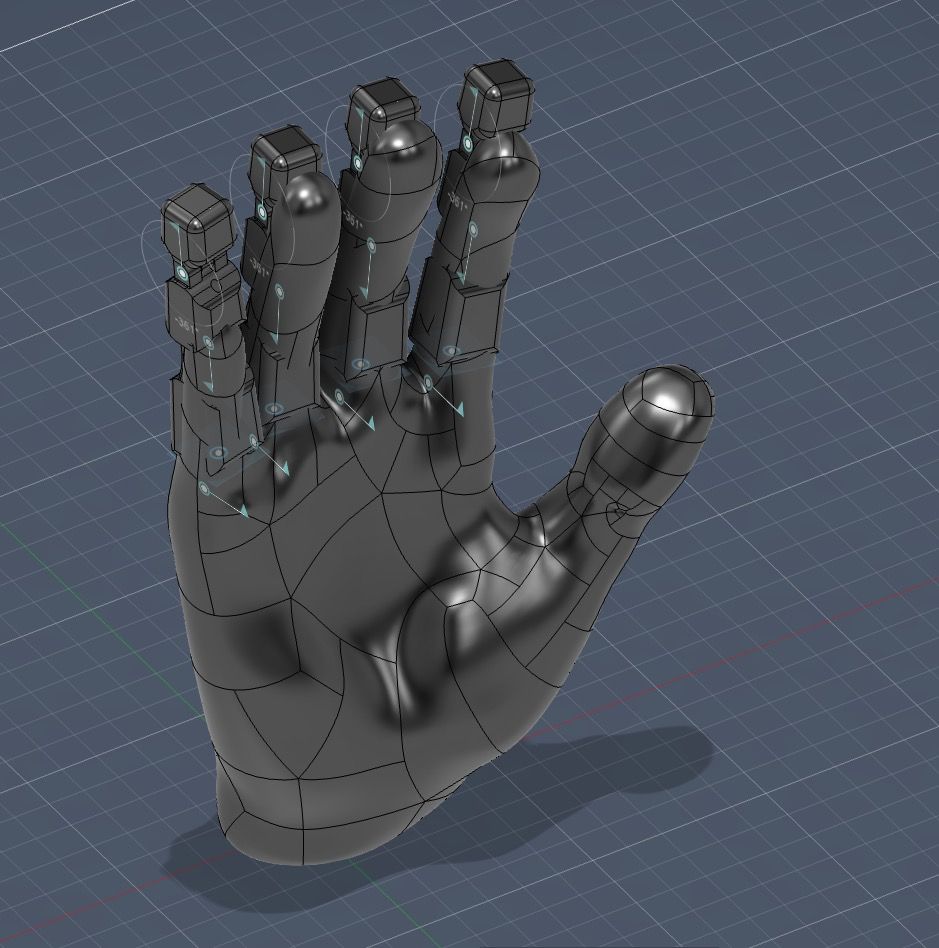
A human hand as the master model
Using a real hand's mesh cleanly sized, shaped and attached the palm, letting anatomy do the proportioning work.
What three weeks cost
I learned more than in any other hardware class or project, getting deep into bed heating, supports, skirts, brims and material settings to land the details.
A project of many moving parts means many things can fail, and when it all prints in one go, any single failure means a full reprint.
I badly underestimated the time it would take; it demanded a lot, mentally and physically, while working nonstop.
I wanted to know if I could build something advanced in under three weeks, and I'm deeply grateful for the support and lessons that made it possible.